
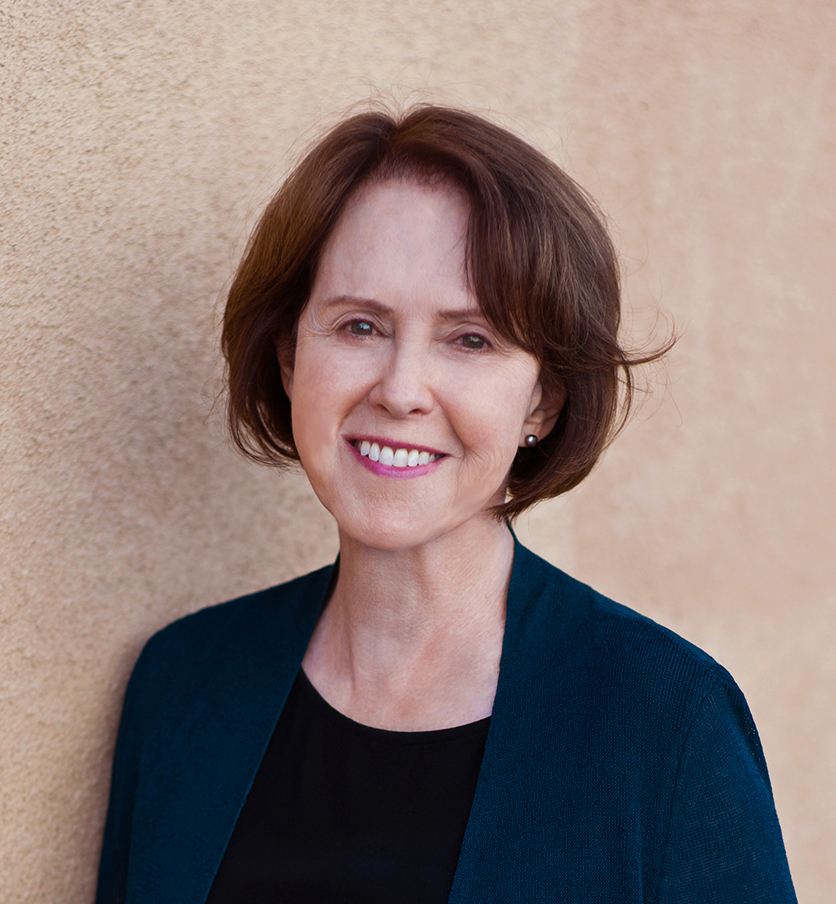
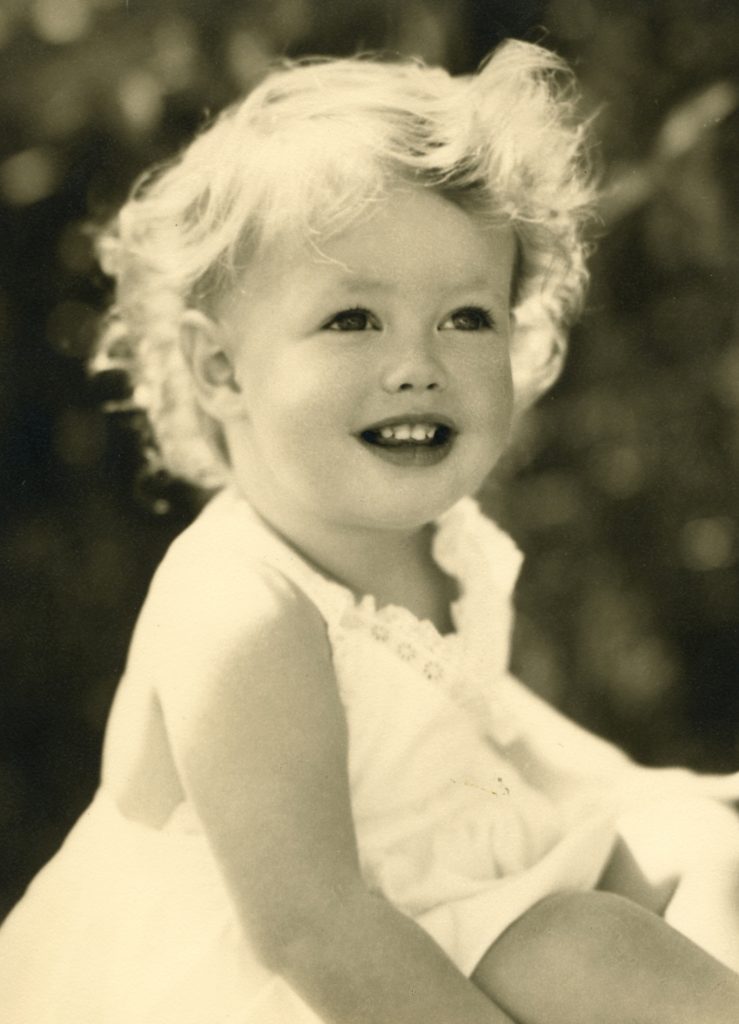
I’m an only child.
Since I didn’t have brothers or sisters to play with, I spent a lot of my time alone–reading, writing, and drawing. I guess things haven’t changed very much since then, because now I enjoy sitting alone in my quiet office–reading, writing, drawing, and painting.
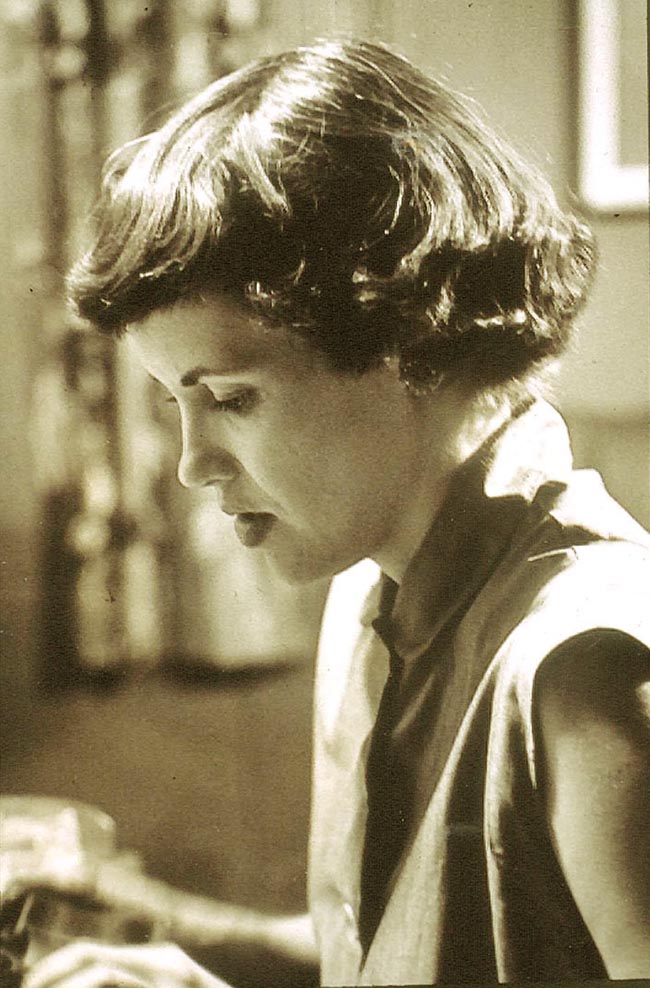
My mother, Fay Stanley, was a published author.
Her first book was a mystery, Murder Leaves a Ring, published in 1950. She dedicated it to me. I remember thinking that someday we would write a book together. We finally did, forty years later, just before she died. It was The Last Princess, a biography of Princess Kaiulani of Hawaii. She wrote it, I illustrated it, and we dedicated it to each other. My mother’s love of books and language inspired me when I was growing up. They inspire me to this day.
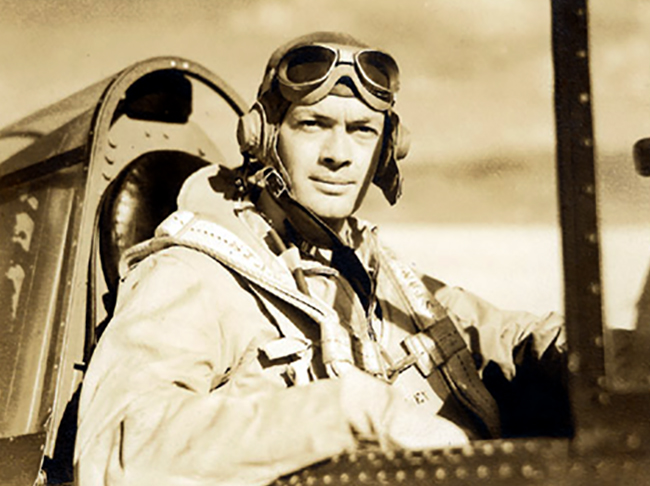
My father, Burt Stanley, was a navy pilot during World War II.
He and Mother were stationed at Pearl Harbor. She was there the day it was bombed, but my dad was away on an aircraft carrier, the USS Lexington. During one action, his Wildcat fighter was shot down. The plane sank into the Pacific Ocean, but my father was rescued. He was later awarded the Distinguished Flying Cross.
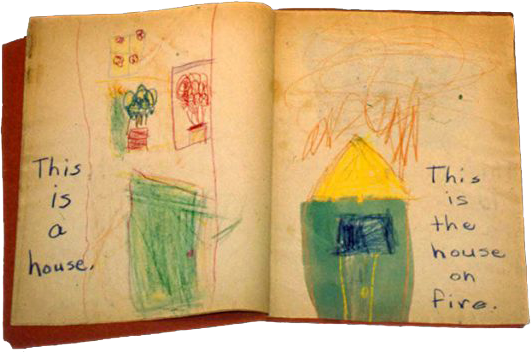
I wrote my first book when I was four.
It was my first book as an author/illustrator. And since it was a true story about the fire we had in our New York City apartment, it was also my first nonfiction title.
I wrote a lot of poetry.
My poems were a little corny, but they scanned perfectly. And even back then, I did a lot of self-editing, always trying to make my work better. It was a good habit, started young.
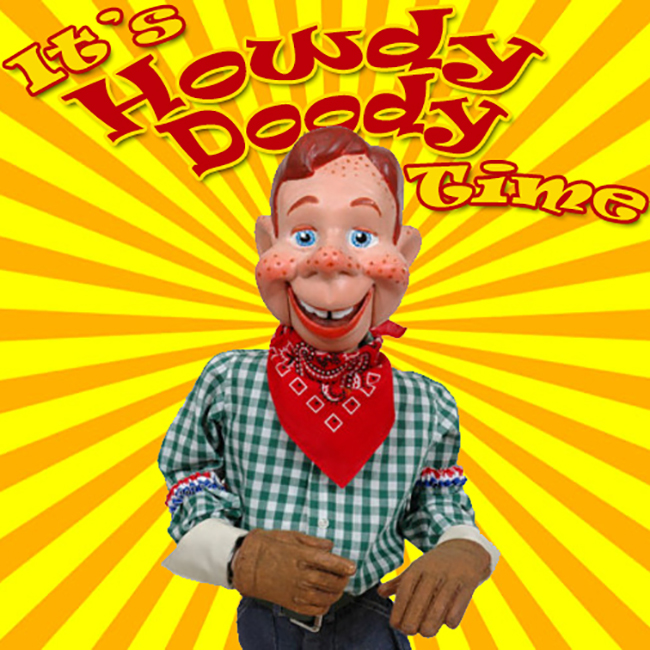
We got our first TV when I was six.
My favorite program was the Howdy Doody Show. I actually got to be on the Howdy Doody Show! It was broadcast from New York, where we lived at the time, and it featured an on-stage audience of children called the “Peanut Gallery.” I got to be one of those kids.
In middle school I tried to write a novel set during the French Revolution.
I had recently read A Tale of Two Cities and had acquired my first typewriter. That’s all you need to become a historical novelist—right? Chapter One got off to a roaring start with a dramatic scene in a dungeon. But when my character escaped, I didn’t know what to write because I knew next to nothing about the French Revolution. There never was a Chapter Two.
I had a goldfish named Fishy Wiggle-Tail.
Later I got a white toy poodle, and being a real show-off, I named him Puccini Barculus Ferocious Atrocious Gregarious Stanley the First. (That’s a big name for a little dog, so we called him Poochie for short.) I don’t have pets anymore because we travel so much.
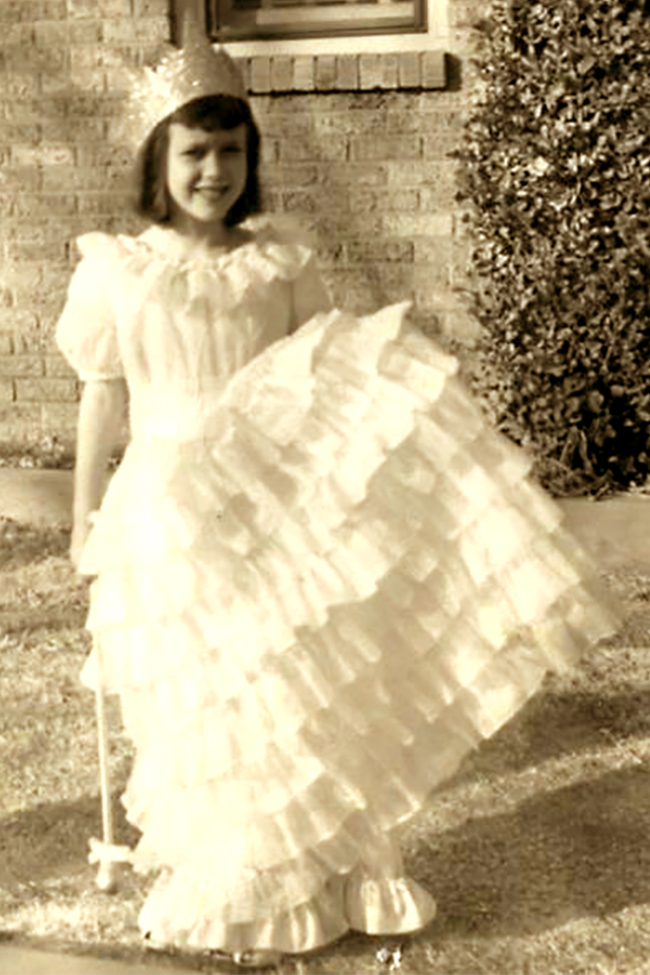
I once told my cousins that I should get my way because “somebody has to be the princess.”
They remind me of this regularly.
I was a failure at ballet.
All I really wanted was to wear a tutu. Sadly, I couldn’t dance my way out of a paper bag. So the ballet teacher phoned my mother and suggested I try art instead. Good call!
I took ice skating lessons at Rockefeller Center.
I was actually pretty good at that. My mother bought me a black velvet coat to wear while I was skating. It came with an ermine muff. (Somebody has to be the princess.)
I saw Mary Martin play Peter Pan on Broadway.
Seven times! I was obsessed! I wanted to fly! After a while my mother got so sick of the play that she started asking her friends to take me. I wonder why she didn’t just say “no.”
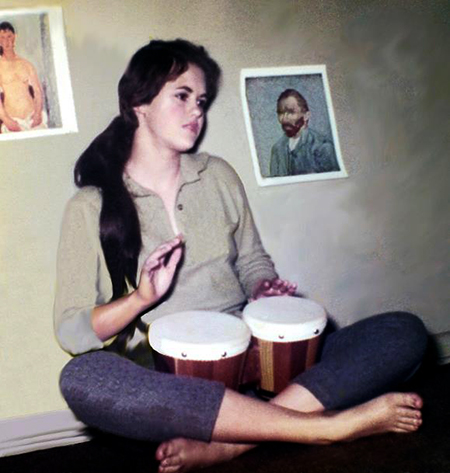
I played the bongo drums during my beatnik days.
I also studied the piano, violin, and guitar. But I wasn’t very good at any of them because I had trouble reading music.
When I was in high school, I wanted to be an actress.
At the age of thirteen, I played Puck in A Midsummer Night’s Dream at an outdoor theater in Balboa Park in San Diego. I studied Shakespeare and classic plays. I was a National Thespian and president of my high school drama club. Then I went to college and moved on to other things. Like art.
I took my first real art class when I was a senior in college.
At the end of the semester, just as I was about to graduate, the teacher called me into his office. He said I was the only student in the class who wasn’t an art major and he was giving me the only A. He told me I had talent. That class and that teacher changed my life.
Before becoming an author, I worked as a medical illustrator.
And before that, I wrapped Christmas packages at a department store, swept floors and cleaned brushes in a hair salon, and wrote ad copy for a local radio station. Later, I worked as a graphic designer and was the art director in the children’s book department of a major publishing house.
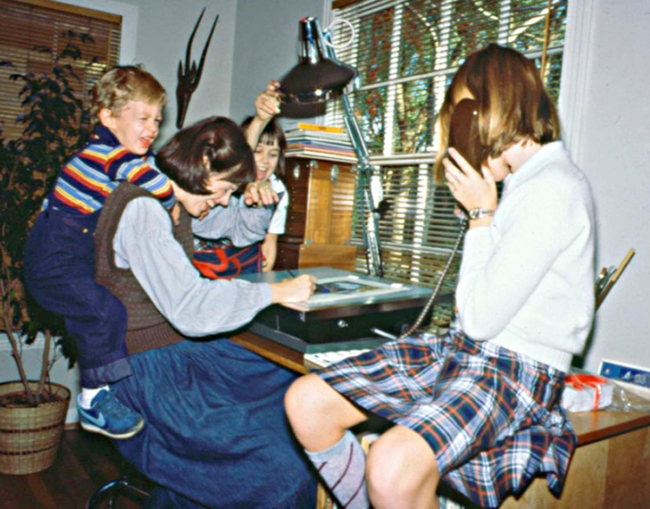
I have three children and three grandchildren
They’re the smartest, most wonderful kids in the world (except for you, of course; I’m sure you’re smart and wonderful, too).
I always worked on my books at home.
It wasn’t always peaceful.
I’ve lived in seven different states and one foreign country.
The states are: Texas, New York, California, Massachusetts, Virginia, Maryland, and New Mexico.
The foreign country is Scotland, where I spent a year studying at the Edinburgh College of Art.
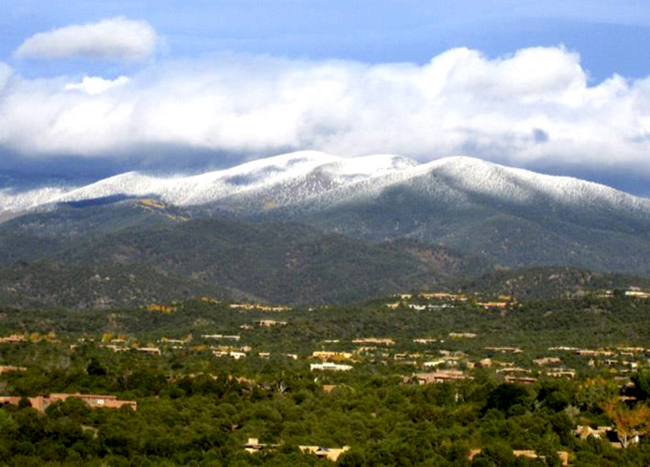
I live in Santa Fe, New Mexico.
Of all the places I’ve lived, Santa Fe is my favorite. It’s the oldest state capital in the United States and the second oldest city, after St. Augustine, FL. We live at 8,000 feet, surrounded by pine trees and often visited by bears. Lots of movies are shot here because the scenery is so beautiful.
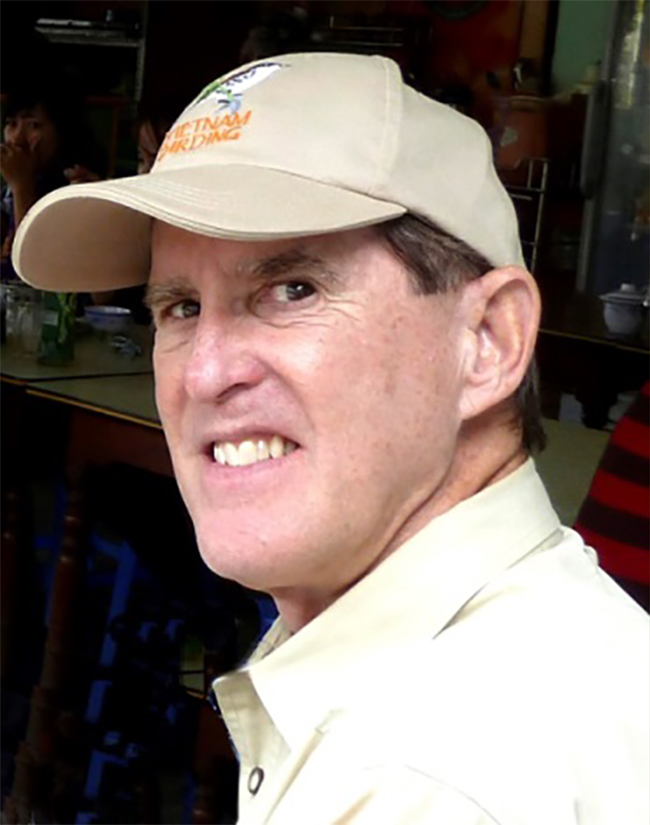
My husband, Peter Vennema, is a fanatical birdwatcher.
Fanatical birdwatchers call themselves “birders.” They are rarely seen without binoculars hanging around their necks.
Peter is also an avid reader, traveler, sports fan, photographer, news follower, map reader, and number cruncher.
He’s also a willing dishwasher, for which I am exceedingly grateful.
In the past he has sometimes helped me with my books.
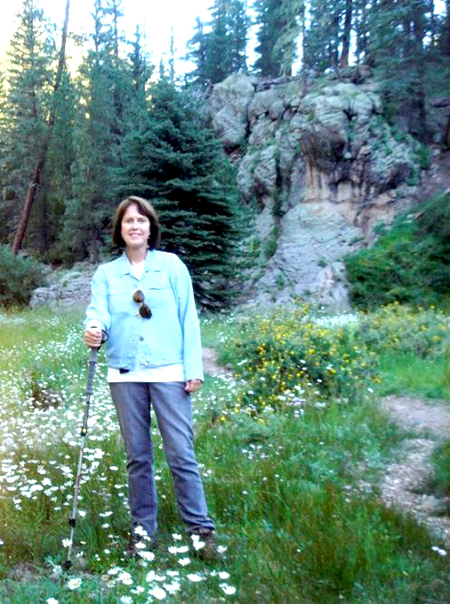
Some of my favorite things to do are skiing, hiking, and gardening.
Also reading, traveling, cooking, and being with my friends and family.
I love my job and I love my life.
I feel very, very lucky.
